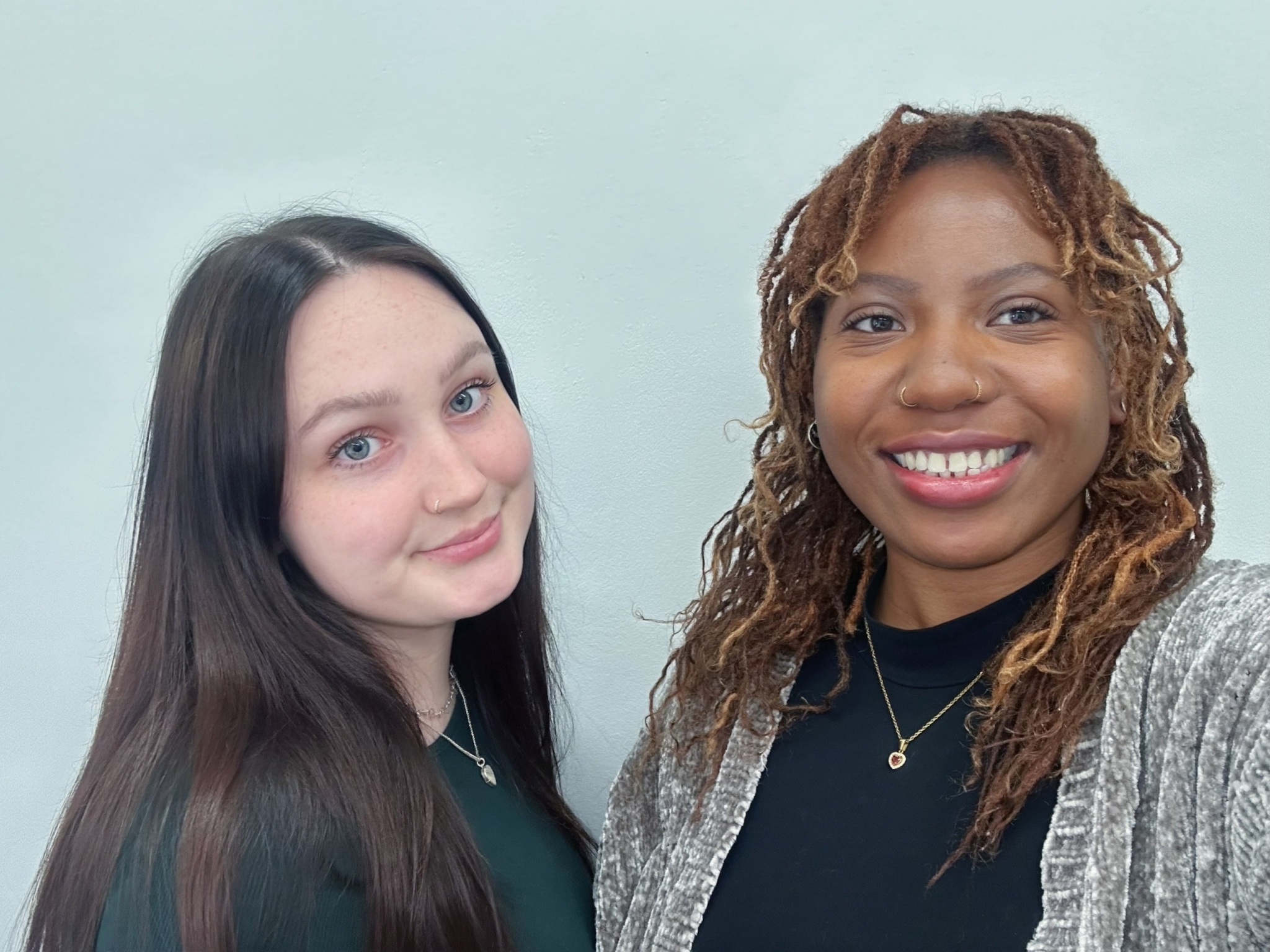
Let’s demystify the learning pathways for translation and interpreting careers. If you are interested in studying languages, you can also do this alongside another discipline, such a business or international relations. Let’s see at what your languages studies could look like by comparing two of our project managers at different stages of their careers…
| Most relevant senior school study |
Undergraduate study | Postgraduate study | Career | |
| Carys | Higher and Advanced Higher French Higher English |
MA French and Italian (integrated masters) |
MSc Translation Studies | Translation project management |
| Antonia | A-Level English | BA Politics, Spanish and Portuguese |
MA Translation, Interpreting and Subtitling | Translation project management |
Carys was able to pick up Italian at university despite not studying it at school. Similarly, I was able to pick up Spanish and Portuguese without having studied them at school.
What do university language courses look like?
Undergraduate language courses are usually five years in Scotland. The first, second and third years are studied at the institution, focusing on improving language skills including reading, writing, speaking and listening. Students will also learn about language culture and history.
The fourth year is gives students a chance to use their language skills in another country by working or studying abroad. Both modes have their benefits, with students being able to integrate into daily life in another country, practise and refine their language skills and have opportunities to learn more outside of their degree specialism. Students often work as language assistants in local schools, with this work being relatively easy to find through the British Council, and are able to work other jobs if they can find them. If you are learning two languages, you will probably spilt your year between the two language countries e.g. French and Italian students could study in France and Italy.
Final year involves consolidating all of your language skills, taking exams, writing your dissertation and opting to take on a placement at a related business to understand how your studies translate to a career. By the time a university student applies to take on an internship with us, they have usually already studied Highers or Advanced Highers in their language(s) of choice and are in the final year of their five-year course at a Scottish university.
Postgraduate study
Some of our student interns will be postgraduates, spending another year at university to become masters of their craft. Postgraduate degrees involve practical experience of the translation strategies for effective translation, practical knowledge of various interpreting techniques and skills and applications of contemporary translation theory.
At the point where students start thinking more about their careers, they are also thinking about demonstrating the breadth and depth of their linguistic knowledge through a dissertation. A dissertation can be up to 15,000 words and, depending on the course, can focus on various areas of translation study including translation, interpreting and subtitling.
What’s it like to write a dissertation?
Carys, currently working with us as a Junior Translation Project Manager, started as one of our postgraduate interns from the University of Strathclyde. After gaining an MA in French and Italian at the University of Glasgow, she chose to further specialise with an MSc Translation Studies course at Strathclyde. Working with Italian, she translated Controverse: Scrivere in Diaspora or Controversial: Writing in Diaspora, Poetics of Becoming. The 2025 anthology of interviews, edited by Livia Apa and Ubah Cristina Ali Farah, sheds light on the experiences of women of colour in diaspora in Italy. It was a rewarding experience, challenging Carys’ knowledge of both Italian and translation theory. Through informed analysis and precise translation, Carys was able to explore the dynamics of power and agency within language, contributing to the work of decolonising language theories.
Similarly, though I studied at the University of Essex, I chose to translate part of Desirée Bela-Lobedde’s Ser mujer Negra en Espana or Being a black woman in Spain. The 2018 book was particularly interesting to me as the author is also black woman born and raised in Europe, used to having her roots and cultural affiliations questioned at various points of her life. Writing about it in depth was a challenge, but allowed me to explore the Spanish language, story-telling devices, Spain’s colonial history and the idea of espanolidad or ‘Spanishness’. There are parallels with Carys’ work in deconstructing diaspora experiences through a deep understanding of language and culture. Through writing a dissertation, I was able to contribute to better understanding of those experiences through making the book more accessible to a wider audience without minimising the importance author’s hertitage, native language and lived experience.
Although Carys and I wrote our dissertations four years apart and took different approaches to our studies, we can both speak to the importance of exploring a language through its literature and marginalised voices to best understand the language’s culture, nuances and environment. Carys has six months of language services experience whereas I am celebrating my fourth this month!
Skills needed to write a translation dissertation
So, what skills do you need to write a translation dissertation?
First of all you need to have a good grasp of the language that you are studying.
Secondly, you need to be an expert in your own language, but with an open mind so that you still remember to research anything that needs it.
Thirdly, you need to be a good writer. Along with understanding the nuances of each language and being able to accurately convey ideas from one to the other, you also need to do so without losing the author’s touch. In some ways, translators are authors in their own right and this is something that you experience while writing your dissertation.
Finally, you have to be analytical. A number of choices can be made when translating and part of the challenge of the dissertation is having to explain, justify and debate those choices. Equipped with the knowledge you have about translation techniques, literacy devices and cultural specificities, it is the translation student’s task to explore and critique their own work to produce the best translation/rendering of a literary text in another language.
Conclusion
In conclusion, there are a range of languages courses out there to hone in on your language skills. Highers and Advanced Highers during senior years give you a firm foundation to take your language studies further, and even learn different languages with introductory courses at the undergraduate level. Some businesses will also pay for you to learn languages if you’ve shown aptitude and they would be valuable for your work. At the postgraduate level, you’re able to put your translation skills to the test and deeply appreciate the theory and practice that has shaped the field. Writing a dissertation entrenches this knowledge and contributes new perspectives to our dynamic space.
And maybe, just before you write your dissertation, you’ll join us for a placement! See you out there in the field…