
Since the Scottish Government’s introduction of the 1+2 Approach in 2013, language learning has increased in primary schools. However, the gap between secondary school education and university language course uptake is currently widening as courses at universities across Scotland are cut. How can schools, universities, businesses and government work together to ensure that language learning is encouraged, assured and continued to a professional level?
What is the current landscape?
Languages are currently taught under the 1+2 Approach, with students learning in their native language, studying an additional language from primary one (P1) and having a further language introduced by primary five (P5). Learning two modern foreign languages should continue until senior three (S3). The Scottish Government allocated £40M for local authorities in 2013-2020 to support the 1+2 scheme. The government point to a lot of success from this policy, with the vast majority of primary schools delivering a third language by P5. At secondary school, there has been an increase in language study uptake at National 5 (N5) and Highers since 2024.
However, language learning advocates worry that overall uptake is still too low. Despite significant investment from the Scottish Government, less children are studying languages through to university. Arguing that a lack of interest in language learning at schools has implications both for university provision and the country’s economic prosperity, experts are keen to dispel myths around language learning being both more difficult and less prestigious than other subjects. With employers keen to recruit for multilingual candidates, ensuring that students continue language learning to a high level can bridge the gap between education and work readiness. Companies competing at a global scale and need to be confident that their cultural and domestic contexts are being considered, therefore those entering the workforce need to be proficient in more than one language.
Why are language courses being cut?
Universities cite a lack of interest and funding as the main reasons for suspending courses. Some experts also argue that the ‘wrong’ languages are being taught. Spanish learning grows in popularity whilst German, French and Italian uptake continues to decline. Outside of English, the languages learnt at school are also different from those used at home; pupils are speaking Urdu, Punjabi, Polish, Arabic and Chinese with their families. Whilst Mandarin (Simplified Chinese) study is also growing in popularity, students are not always guaranteed adequate time to make notable progress.
Language experts suggest that in order to see better student outcomes, provision from proficient teachers, specifically qualified in language teaching, must be implemented. They also emphasise the need for stronger messaging from universities to inform wider society’s understanding of the benefits of language learning and therefore secure Scottish young people’s success in the global, multilingual job market.
What about Gaelic?
Scotland’s language learning environment is influenced by a variety of factors. The push for Gaelic language provision has created a unique environment for it to flourish. However, significant gaps in everyday usage among native speakers persist. Opinions of language learning differ and impact the learning environment in various ways. Notably, the director of CBI Scotland notes that a minority of employers think that the workforce has adequate language skills, leading to a lack of global impact. Some parents are open to language learning but do not find local languages such as Gaelic and Scots useful, whereas others understand that learning any language is beneficial and can lead to improvements in overall literacy as well as third language acquisition.



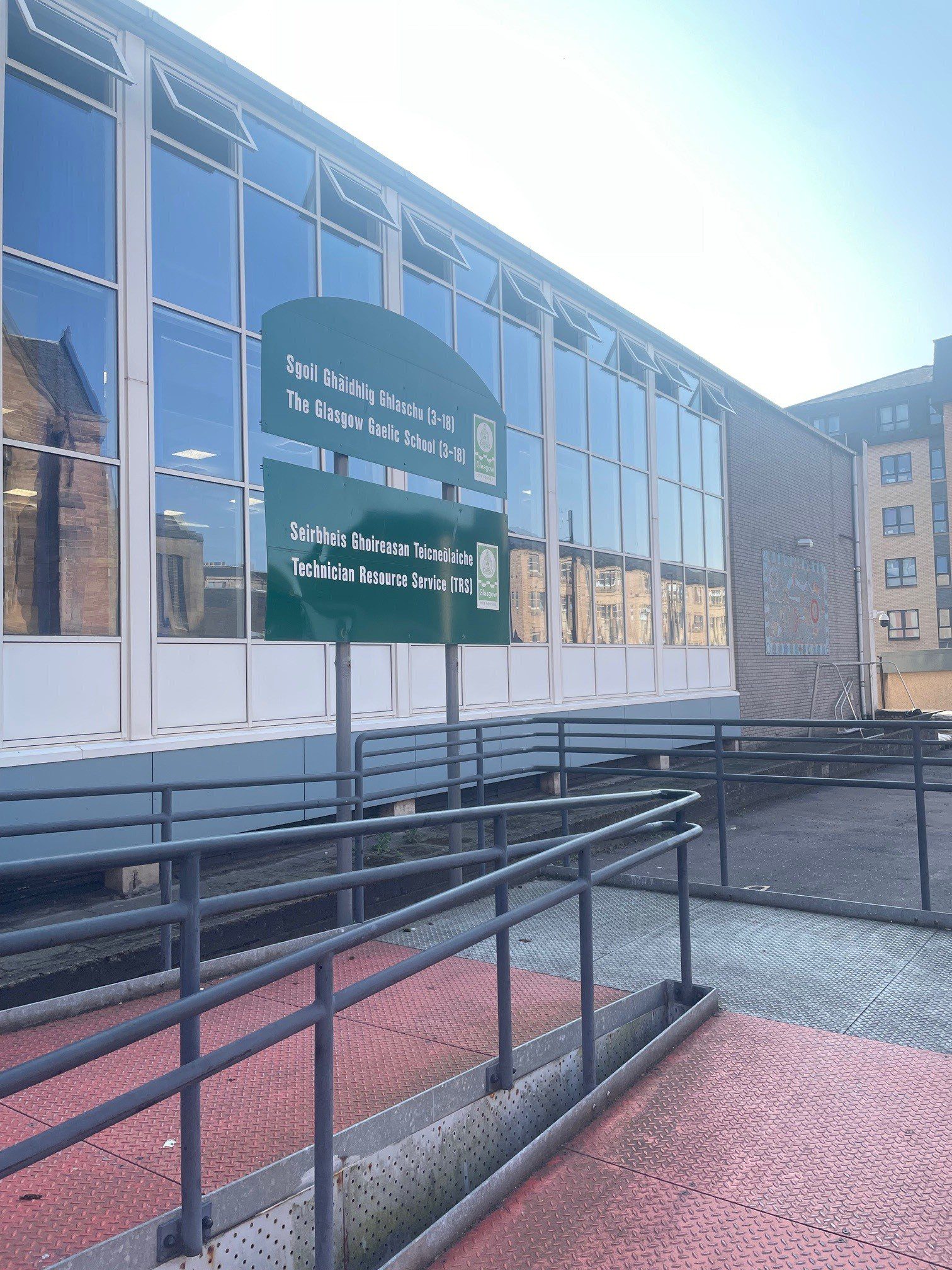




What challenges are we facing?
Primary school students have a marked appetite for language learning however, secondary schools are struggling to foster this strategically. The majority of secondary schools were teaching students one modern foreign language at 70% however, they were failing to deliver the second foreign language required by the 1+2 Approach. In 2025, the majority of secondary schools were running multi-level language classes, with students working towards three or more qualifications, taught by one teacher. Students in lower income areas are most likely to be affected by multi-level provision which arguably leads to students believing languages don’t deserve dedicated time and learning.
Considering this, it tracks that Highers study is down to concerning levels, especially for French and German. The numbers are boosted by Spanish and Mandarin learning, along with better provision in primary schools, but overall there is still a need to emphasise that, ‘English is not enough’ and to foster language learning intentionally beyond primary school. In my own experience attending senior school careers fairs, it’s still important to pushback on the idea that “everyone speaks English”. While this may be true at holiday resorts or other popular tourist destinations, we impress upon students the reality that a minority of the global population (approx. 19%) speak English and, while English is useful in many contexts, it’s always valuable to learn some of the local language to make sure you’re fostering meaningful relationships with others.
British Council’s Language Trends Scotland 2024-25 report illuminates the quality of language teaching. Unfortunately, some children are only exposed to 30 minutes a week, even when they are learning two modern foreign languages, where 60 minutes per language would be needed to see progress. Again, pupils from deprived areas are most affected by this.
In primary schools, classroom teachers deliver almost all language teaching, while specialist language teachers account for just 10% of this. French is often the first foreign language that students are introduced to. This can be a useful jumping off point for increasingly popular Spanish study, but the effectiveness of and enthusiasm for further language study could be improved by ensuring notable progress in French during the seven years P1-P7.
Conclusions
Overall, the above paints a positive picture of the future of language learning in Scotland. The Scottish Government has made significant investment into modern foreign language education resulting in more children studying languages than ever before. Despite challenges in some areas, students continue to be interested and engaged, with aspirations of using their skills in their careers and personal lives. Students will likely continue to learn Spanish at higher rates as it continues to be a popular tourist and study destination. Mandarin is also likely to rise in popularity as new routes to China open up with lowered visa requirements for UK passport holders. Global Connects will continue to drive interest in language learning through careers days and support university students into work with our placement opportunities.
What could be done to improve the language learning landscape?
Language provision would be improved by ensuring that teachers not only have a good level of language acquisition but also understand how to most effectively teach a language. This would be further supported by dedicated time to teach students in a way that adequately provides for their skill level. Local authorities and the government would need to ensure that these components can be guaranteed up to S3 and beyond for interested students.
Universities would benefit from continuing language courses to ensure that students can see a clear pathway from learning at school to becoming proficient professionals. Students are often interested in combining language study with other subjects, something that is valued in the workplace and can be leveraged if approached strategically. In my own industry, companies should be open to dual degree language graduates joining language services and ensuring comparable salary and benefit packages to ensure we are not losing out on talent to other industries. With schools, local authorities, universities, businesses and the government collaborating to protect language learning as a core skill rather than optional enrichment, we can be optimistic about it’s future in Scotland.
Bibliography
- https://www.heraldscotland.com/news/17205638.slump-school-language-learning-hits-scottish-universities/
- https://www.tes.com/magazine/archive/how-cutting-university-languages-courses-hits-schools
- https://community.babycentre.co.uk/post/a26255359/scotsirishwelsh-kids-learning-useless-languages-at-school
- https://www.tes.com/magazine/archive/teachers-lack-understanding-benefits-learning-languages
- https://scilt.org.uk/A12ApproachtoLanguageLearning/tabid/1715/Default.aspx
- https://www.aberdeenshire.gov.uk/schools/school-info/language-learning-in-scotland-a-1plus2-approach/
- https://www.tes.com/magazine/archive/secondaries-failing-deliver-right-languages
- https://www.bbc.co.uk/news/articles/c722dewd93vo
- https://www.lspjournal.com/post/beyond-the-1-2-approach-in-scotland-s-language-policy-landscape-implications-for-policy-and-practic
- https://policyblog.stir.ac.uk/2025/03/04/whats-the-future-for-languages-in-scotlands-schools/
- https://scotland.britishcouncil.org/about/press/language-learning-crossroads-scottish-schools-new-british-council-report-reveals
- https://www.heraldscotland.com/news/25827625.depth-language-learning-scotlands-schools/
- https://www.thenational.scot/news/25825503.report-says-scotland-excellent-foundations-language-learning/
- https://educationbusinessuk.net/news/05022026/language-learning-rise-scottish-schools
- https://scotland.britishcouncil.org/about/press/language-learning-rise-scottish-schools-despite-structural-barriers-report-finds
- https://www.ucl.ac.uk/news/2026/apr/young-children-motivated-learn-language