
At Global Connects, we champion Scotland’s young people as they prepare for the world of work through the Young Persons Guarantee. One of the ways we do this is by giving school-age students the opportunity to learn more about languages careers in hands-on ways. Returning to Williamwood High School in Clarkston for their S3 Skills Event on 29 May was a fantastic opportunity for Global Connects to continue empowering young people, as you will see below.
What was Williamwood’s S3 Skills Event about?
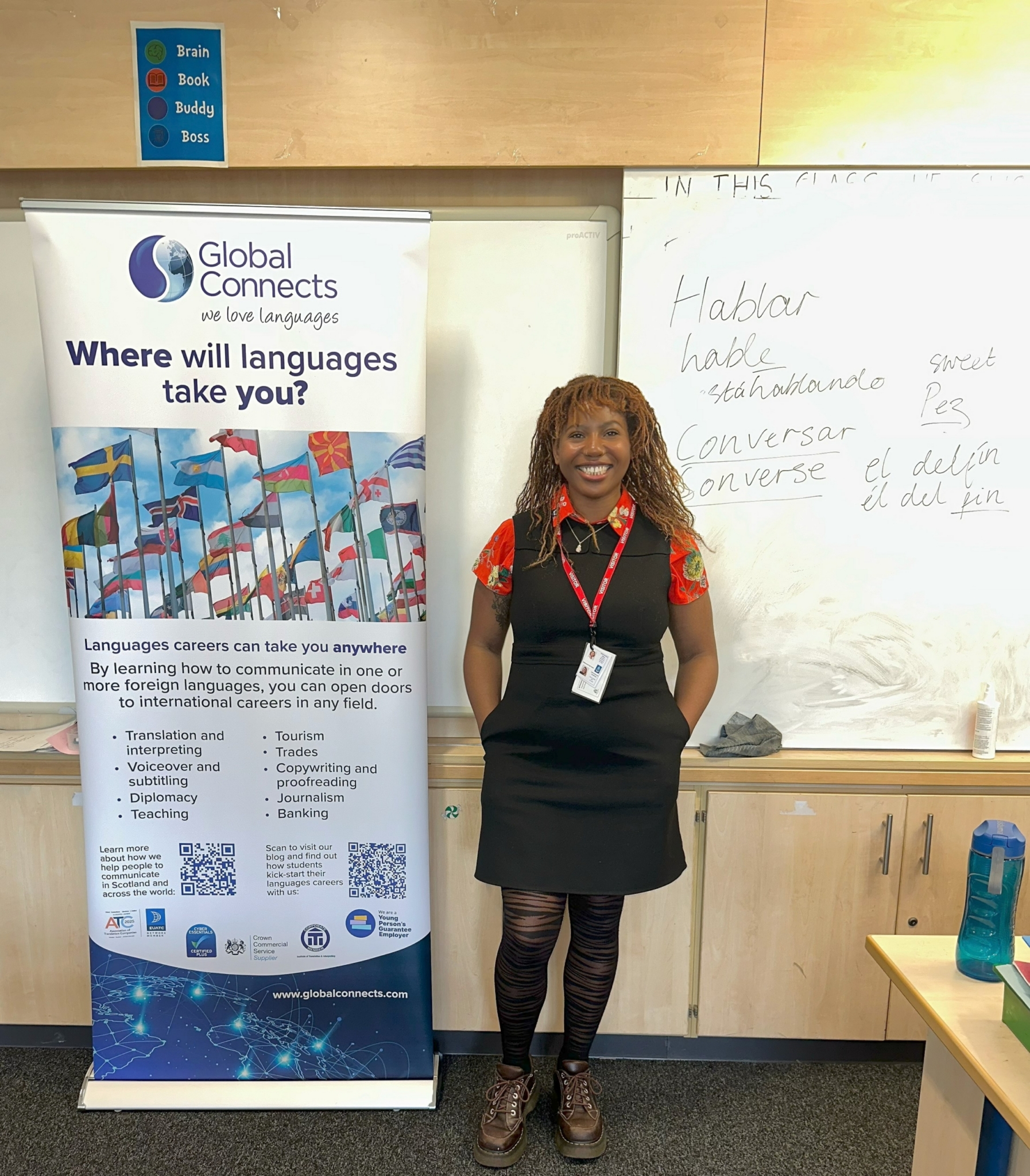
With the ability to attend a range of exciting workshops throughout the day, students were able to develop and strengthen different skills they would need for various career paths across industries. As a passionate and experienced translation project manager, I was eager to to create something special to show students just how rewarding a career involving languages can be. Our session was called Going Places and focused on three core skills that are vital in the language services industry and others: effective communication, attention to detail, and confident use of technology.
What did the Going Places workshop include?
Introductory presentation
We kicked things off with a short presentation exploring the wide variety of roles available both within the language services industry and in other sectors where language skills are an asset. While most students were already somewhat familiar with careers like teaching, translation and interpreting, many were surprised to learn just how many opportunities exist. We explored a range of traditional and emerging roles, focusing on those which have become increasingly important as our industry changes. From cultural expert and project manager to localisation specialist and implementation expert positions, students were able to understand the key role of skilled, talented, multilingual individuals across industries.
We also highlighted the crucial role translation plays within the NHS, especially in a linguistically diverse country like Scotland where more than 170 languages are spoken. One student guessed that around 150 languages were used in Scotland, which was impressively close and showed that many young people already have a strong awareness of the importance of language learning to strengthen their communities and for their own career building.
Translating humour
Skills: effective communication and attention to detail
Next, we dived straight into the fun stuff – students were tasked with translating jokes from French or Spanish into English. While not all of the jokes were laugh-out-loud funny, students were able to explain what made a joke worth a chuckle and then figure out if they could translate this into English. They were able to practise transcreation by changing jokes so that English-speaking audiences could enjoy them in a similar way. We also emphasised that humans are best at humour and are still very much needed for a range of nuanced translations that AI cannot successfully replicate.
Through homing in on the details that make a short joke funny, students were able to consider audiences within their own language cultures and communicate effectively in ways they hadn’t considered before.

Hoose o’ Scran
Skills: effective communication and attention to detail
Next, students were welcomed to the grand opening of my new restaurant ‘Hoose o’ Scran’. They were surprised to learn that they wouldn’t be able to ask the waiters any questions about the food and, with their French or Spanish-speaking visitors in tow, they needed to figure out how to best translate typical Scottish cuisine. Delicacies like clootie dumplings, Arbroath smokies and fish supper posed some challenges. First, we explored the importance of being cultural experts within our native contexts, then we dissected some of the traditional meals in Scotland with the understanding that a Scottish dish may not always be what it says on the tin. We also acknowledged that many people have some knowledge of English as a second or third language, and therefore may misinterpret what a dish actually is. Students considered the confusion shortbread and oatcakes might cause. Finally, we thought about how we would translate particular dishes into French or Spanish concluding that often a literal translation would be needed so that a diner would be fully aware of the type of dish they would be eating, as well as any allergens that could be present. Luckily, we can usually ask questions about restaurant menus in real life, but we can also run into language barriers depending on how familiar we are with local cultural contexts.
By understanding how to pay attention to cultural details and empathise with non-native speakers, students were able to further develop their communication skills and prepare for working with languages in their careers. They learnt how important it is to be a cultural expert within their native language communities and how that can open doors to confidently navigating other contexts.
Technology
Skills: effective communication and technology
After filling up on a range of Scottish delights, students were tasked with thinking about technology. The extra terrestrials “visiting” the classroom were very curious about the different types of technology students were using. Tthey wondered why, with computers in their pockets, students would bother using laptops or desktops. How come standalone cameras haven’t disappeared when smartphones can take such high‑quality photos? And what about walkie‑talkies – why do they still exist when mobile phones have been around since the 90s?
Through these questions, students realised that it was important to know how to use different types of technology as different situations call for differing levels of convenience, specialisation or power for the best results. They understood that in a world full of multiple options, including AI-powered ones, they would still need to use their discernment, education and skills to decide what technology would suit what task the best.
Plenary
We wrapped the session up with interesting questions about what it’s like to study languages at university and what it’s like to work with languages. Some students showed an interest in working in tourism within Scotland while others were more interested in using their language skills to travel to Spanish and French speaking countries. Most students were willing to consider languages as part of their Highers study and felt that they had learned a lot from the session.
Conclusion
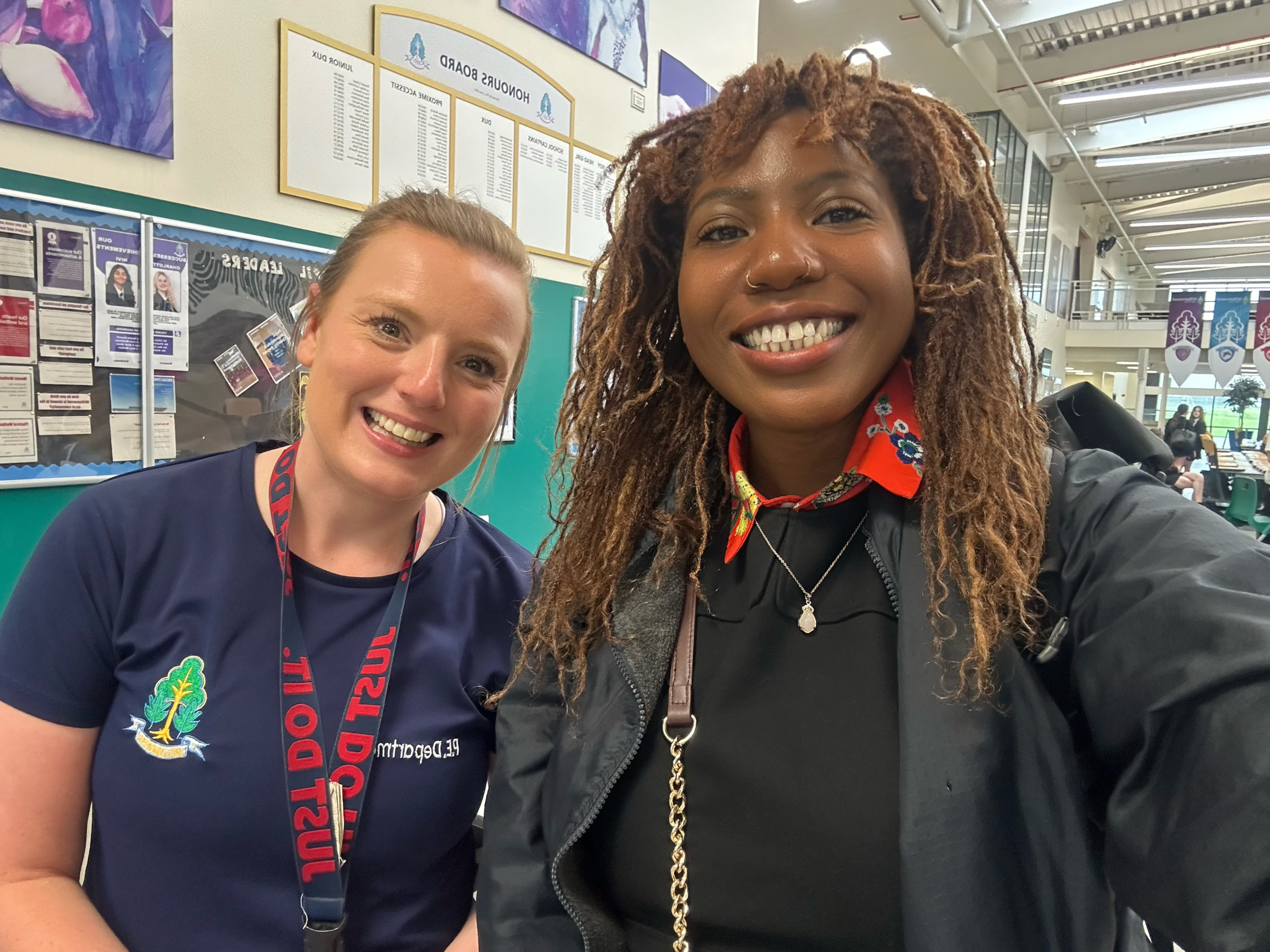
A huge thank‑you to Williamwood’s S3 students for their thoughtful questions, enthusiastic participation, and for sharing their own knowledge and insights with me throughout the day. A special thank you to Eilidh Briggs, Principal Teacher of Developing the Young Workforce and teacher of physical education, along with her colleagues, for organising the day.
At Global Connects, wee are always eager to share knowledge with the next generation of translators, interpreters and project managers and more, and look forward to seeing some of them in the industry in the next few years. For more information about careers talks, workshops and opportunities, please email hello@globalconnects.com.
