What the Barbie exhibition can teach us about lasting success
It’s an exciting time to be in Glasgow. With the Commonwealth Games coming up, there are a whole host of special events this summer! One thing I couldn’t miss was the BarbieTM Exhibition at Kelvingrove Art Gallery and Museum. Read on to learn more about my experience and what we can learn from it.
“Barbie pink”
Pink, nostalgia and Margot Robbie. That’s what I expected when I thought about visiting the BarbieTM Exhibition at Kelvingrove Art Gallery and Museum. Like many of us, I played with Barbie dolls as a child, and moved on to the more fashionable BratzTM dolls as a tween. I didn’t think Barbie had much of an impact on me, though I do think the 2023 film helped to remind a lot of women how special it was to grow up in an era when girls (and boys) were encouraged to do anything they could dream of.
What I did not expect was being offered an insight into how brands evolve and why the smallest details matter. On it’s 65th anniversary, let’s explore Barbie’s enduring success and how we can replicate it.
More than one Barbie
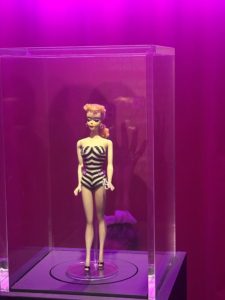
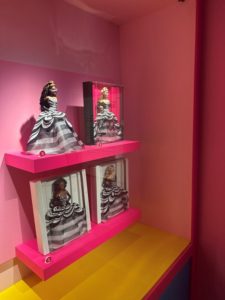
As you walk in, the original 1959 doll greets you with her signature vintage style. Of course, the 65th anniversary Barbie pays homage to her with a blonde Barbie in a stripey black and white ballgown but also offers representation in the form of a similarly glamourous darker skinned sister. At first, I assumed she was one of Barbie’s friends, perhaps Christie, but she is Barbie too.
Some people resist the idea of fictional characters changing appearance, particularly skin colour but the idea that there can be many versions of Barbie, and that they are all still Barbie, is particularly compelling.
The 2023 Barbie film reinforces this idea beautifully. All the Barbies call each other Barbie, whether they are played by Margot Robbie, Dua Lipa, Issa Rae, or someone else. Barbie is not one face, one body, or one version of femininity. Barbie can be many things at once.
How brands change without losing themselves
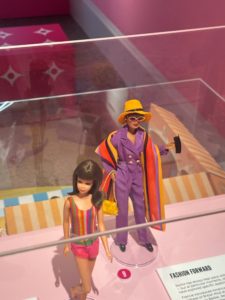
The exhibition also shows how much Barbie has changed through the decades. The logos have changed, the dolls have changed and even the famous ‘Barbie pink’ was not originally part of her design.
The brand has responded to cultural emphases on representation and experimented with new ideas without losing its core identity. For Barbie, that core idea seems to be imagination. Barbie can be anyone, which means children can imagine becoming anyone too.
Despite all of that change, Barbie remains instantly recognisable. Their message remains the same whilst being reinterpreted for different generations.
Representation is in the details
Some of the most interesting parts of the exhibition were the dolls created to represent different bodies, backgrounds, abilities, professions, and identities. Seeing those changes side by side makes it clear that representation is not just about making one visible adjustment and calling it inclusion.
For example, I loved seeing different hair textures represented. Hair is not a small detail. For many children, seeing a doll with hair like theirs can help them understand, care for, and feel proud of their own hair. It can also help other children see different textures as normal and beautiful.
The same applies to body shape, limb difference, skin tone, facial features, clothing, and career choices. Meaningful representation requires thought. It asks brands to look beyond surface-level diversity and consider the real details that help people feel recognised. Mattel could go further and ensure that there are a wider variety of face shapes and features when representing different ethnicities. Plastic production is also a major environmental concern.
Of course, not every attempt will be perfect (Happy Family Midge, anyone?). But that is part of the point. Representation is not something a brand completes once and then moves on from. It is something that has to be revisited, questioned, and improved over time.
Where are the Kens?
Men. They exist. Barbie’s world is full of variety, but Ken does not always seem to have been given the same level of attention or imagination. In the exhibit, Kens had two dedicated shelves and were lightly sprinkled throughout.
Honestly, this made me think about wider assumptions around gender, play, and even work. Dolls are still often treated as if they’re just for girls, just as languages and translation are sometimes viewed as more feminine spaces. But when I have visited schools, boys have been just as enthusiastic as girls about languages. The interest is there but what stops boys from pursuing translation careers is still a matter of debate. Stereotypes around translation and interpreting being low-paid, women’s work for (those of us who made our year abroad our whole identity) certainly contribute to that.
Perhaps the question is not simply why there are fewer Kens, but why society still places limits on what boys and girls are encouraged to enjoy, study, or imagine for themselves.
Final Thoughts
Ultimately, the Barbie exhibition is a visually impressive journey through how brands maintain their core identity and respond to social change. It raises bigger questions about identity, inclusion, and imagination. While we can’t rely on brands to spark social change, we can learn from the ones that aren’t afraid to consider it.
And if Kelvingrove Art Gallery and Museum, Barbie, or Mattel ever need translation services, I hope they know where to find us, because I would be more than happy to project manage that brief.